
Abdominal aortic aneurysm
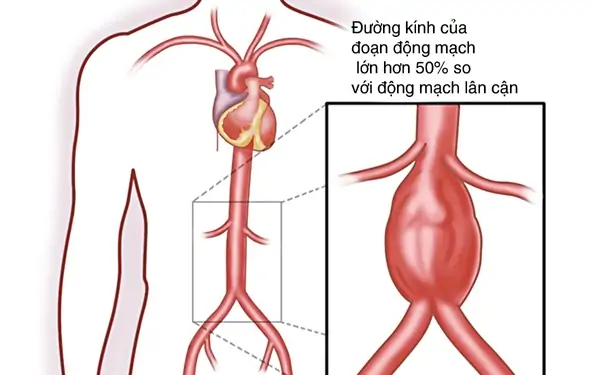
When blood vessel walls weaken, there is sometimes a balloon-like expansion called an aneurysm. This occurs most often in the abdominal aorta, an essential blood vessel that supplies blood to your legs.
Quite common
Each year, 200,000 people in the US are diagnosed with an abdominal aortic aneurysm (AAA).
Rupture of AAA is the 15th leading cause of death in the country and the 10th leading cause of death in men over 55 years of age.
Family history is important
Aneurysms run in families. If a first-degree relative has AAA, you are 12 times more likely to develop an abdominal aortic aneurysm. Among patients being treated for AAA repair, 15–25% have a first-degree relative with the same type of aneurysm.
Symptom
May be absent
In most cases, an abdominal aortic aneurysm causes no symptoms and is discovered when you are being evaluated for another medical condition.
Sudden, severe stomach or back pain
If you have a family history of AAA and feel sudden, severe pain in your abdomen or back, seek care immediately. These symptoms may signal that you have developed an AAA, possibly one that is in the process of rupturing.
Pain, skin discoloration, ulcers on feet and toes
A small percentage of patients with AAA have these symptoms when plaque or blood clots from elsewhere in the body accumulate in the feet and toes.
Factors that contribute to the formation of AAA
- Some types of inflammation weaken the aortic wall. Highest risk: Men over 60, smokers, white people, and anyone with a first-degree relative with AAA
- Age (50+ for men, 60+ for women) and a history of atherosclerosis, high blood pressure, elevated cholesterol, heart or peripheral vascular disease and tobacco use
- Other potential factors associated with AAA formation: arterial wall tears, infections, and congenital connective tissue disorders
You may need to see a vascular surgeon
Most AAAs do not cause symptoms and are discovered incidentally during the evaluation of another medical condition. If you are affected, see a vascular surgeon.
Imaging tests may be necessary
Abdominal ultrasound is painless, cost-effective, safe, and the most frequently used test to screen and measure the size of AAAs.
A computed tomography scan (CTA) will assess the size, location and extent of the aneurysm. This study requires exposure to radiation and intravenous injection of contrast material. However, CTA provides valuable anatomical information and can help your vascular surgeon determine the optimal type of repair.
Treatment methods
Treatment depends on the size of the aneurysm.
Small AAA (diameter less than 5 cm)
Such AAAs have a very low risk of rupture but should be monitored.
- It is important to have an ultrasound every 6–12 months to monitor aneurysm growth and risk of rupture. Lifestyle changes help control blood pressure and medications may help.
- If you smoke, ask your vascular surgeon to help you find a smoking cessation program that is right for you.
- Daily exercise is also beneficial.
Larger (diameter more than 5.0-5.5 cm)
Symptoms develop rapidly and the resulting AAA is usually corrected.
Open surgery
This requires placement of a prosthetic graft.
- The vascular surgeon will access the affected part of the aorta through an incision in your abdomen.
- Most patients stay in the hospital for 4 to 10 days. Recovery time can be up to three months.
Endovascular aneurysm repair (EVAR)
This is a less invasive treatment method.
- Two small incisions in the groin are made. Guided by X-ray images, the vascular surgeon inserts a small device into the artery. This device is used to strengthen artery walls and eliminate aneurysms.
- Most patients stay in the hospital for one to three days. Recovery time is shorter than open surgery.
Live healthy
- Know and share your family history. If you are diagnosed with an abdominal aortic aneurysm, educate first-degree relatives about their increased risk.
- If you smoke, ask your vascular surgeon to help you find a smoking cessation program that is right for you.
- Follow a healthy, low-sodium diet.
- Maintain a healthy weight.
- Exercise regularly.
- Check blood pressure and cholesterol regularly.
- Ask your primary care physician to evaluate you for medications that help control blood pressure, lower cholesterol levels, and/or thin the blood.