
Carotid artery disease
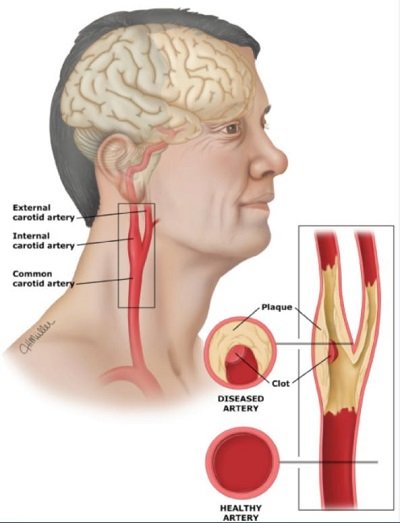
The carotid artery is the main artery in the neck that supplies blood to the brain. A substance called plaque builds up inside your arteries as you age. If too much plaque builds up in the carotid artery, it can cause the artery to narrow (carotid stenosis). Small blood clots can form, then break loose and travel to the brain, causing a mild or severe stroke.
Up to 3% of people over 65 years old have carotid artery disease. Your risk increases as you age and is heightened if you have a history of smoking, high blood pressure, high cholesterol, diabetes or heart disease. Carotid artery stenosis is the cause of up to one-third of strokes. Stroke causes 1 in 15 deaths. About 700,000 strokes occur each year, most often in men.
Symptom
May be absent
Most people with carotid artery disease, even with severe blockages, have no symptoms. This condition is discovered during a routine physical or eye exam or is discovered after a stroke.
In a small number of cases
Very rarely, carotid artery disease can cause tinnitus or fainting due to reduced blood flow to the brain. Neck pain is not a symptom of carotid artery disease.
Weakness, paralysis, slurred speech
The first sign of carotid artery disease may be a stroke, mini-stroke, or TIA symptoms, such as weakness or numbness on one side of the body. You may also experience slurred speech or drooping of the face.
Reason
The most common cause is plaque buildup in the carotid arteries due to many risk factors, such as a history of smoking, high cholesterol, high blood pressure, and diabetes. This type of plaque forms in the heart and causes heart attacks.
In rare cases, the carotid artery may narrow due to inflammation.
Diagnosis
A routine physical exam involves the doctor using a stethoscope to listen to the heart and certain blood vessels. A whistling or “clicking” sound coming from the carotid artery may indicate that plaque is building up inside the artery and cause your doctor to recommend that you see a vascular surgeon.
It can also be detected during an eye exam if your doctor finds plaque in the arteries that supply the retina.
See a vascular surgeon
You will be asked questions about your symptoms and medical history, including questions about family members. The vascular surgeon will also perform a physical examination.
Tests that may be recommended
- The most common and non-invasive diagnostic test is the non-invasive carotid duplex scan using two types of ultrasound. The test can determine whether the artery is narrowed and, if so, will give an accurate estimate of the severity.
- Alternative radiological tests are sometimes used to determine the presence and extent of narrowing. These include computed tomography (CT), magnetic resonance angiography (MRA), or angiography .
Treatment method
Treatment for carotid artery disease is given to reduce the chance of having a stroke or recurring strokes. Specifically depends on the degree of narrowing of the artery.
MEDICATION, often a combination of drugs, can help slow the progression of carotid artery disease. Aspirin and drugs that lower cholesterol and blood pressure are often prescribed when the degree of narrowing is below 50-60%. Medication may need to be adjusted as the disease progresses.
- STOP SMOKING is important for controlling carotid artery disease and your overall health.
- Surgery may be recommended. If the stenosis is more than 60%, in addition to medication, you may benefit from carotid endarterectomy or carotid angioplasty and stent placement.
healthy living
Here are ways to slow the progression of carotid artery disease:
- Ask your vascular surgeon about medications that can help control the disease, including medications that can lower blood pressure and blood cholesterol, and make your blood less sticky.
- Follow a healthy diet and eat in moderation.
- Exercise safely and more often through non-strenuous activity, such as walking.
- If you smoke, work with your vascular surgeon to find a smoking cessation program that’s right for you.